[2024]
How we turned complex contractor cost data into a structured, risk-focused assurance workflow.
Industry
GovTech, Financial Operations
Platforms
Web
My Role
Founding Designer
Timeline
6 months

[Project Background]
National Highways manages England’s motorways and major A roads, including infrastructure programmes worth millions to billions of pounds. Its commercial teams verify contractor payment claims, but manual assurance made reviewing complex financial data slow and difficult to scale.
[Business Problem]
Assurance couldn’t scale with the volume of data. Under tight time constraints, teams reviewed only samples rather than full payment applications.
Roc technologies (national highways contractor) reported that only 20% of cost data was typically reviewed, increasing financial and compliance risk.
[Business Goal]
100% cost assurance instead of relying on ~20% sampling
Identify questionable costs earlier
Lower operational effort without increasing assurance headcount
Reduce the effort required to process payment applications
Built an end-to-end workflow for setting up infrastructure projects, aligning cost data, and reviewing contractor payment requests.
Combined automation with human review so assurers could validate rules, surface risky transactions, and make traceable decisions.
The wider solution reduced assurance checks from days to minutes and enabled 100% cost review instead of ~20% sampling.

Stakeholders interviews
Competitor analisys
User flow
Wireframing
Prototyping
Usability testing
Visual design
Challenge 1 / Create multi-role approval logic
How might we define a clear approval process across contractors, assurers, project managers, and contractor managers?
Problem:
Each cost line passed through multiple roles with different permissions and actions, making the approval workflow complex and vulnerable to breakdowns between handoffs.
Defining the Logic:
The workflow wasn’t predefined, so we worked cross-functionally with BA, QA, Delivery, frontend, and backend teams to define:
Roles and permissions
Ownership and handoffs
Approval and rejection states
Partial payments
Correction loops
Edge cases and technical constraints
We used collaborative workshops to map the workflow, align on roles and handoffs, and work through edge cases before moving into detailed design.


Outcome:
A single approval chain with clear ownership, defined decision points, and traceable handoffs from submission through payment.
Challenge 2 / Structure projects for cost assurance
How might we standardize project data before contractor costs enter the assurance process?
Problem:
Assurance depended on consistent project data, but each project contained multiple connected structures — control accounts, WBS elements, locations, codes, contractors, and teams.
Solution:
We created a structured project setup flow that lets Project Managers configure these dependencies before contractors begin submitting cost lines.
Outcome:
A consistent data foundation for cost alignment, assurance, and payment review across the project lifecycle.
Project creation
Step 1 / Open projects list

Step 2 / Create project

Step 3 / Set project

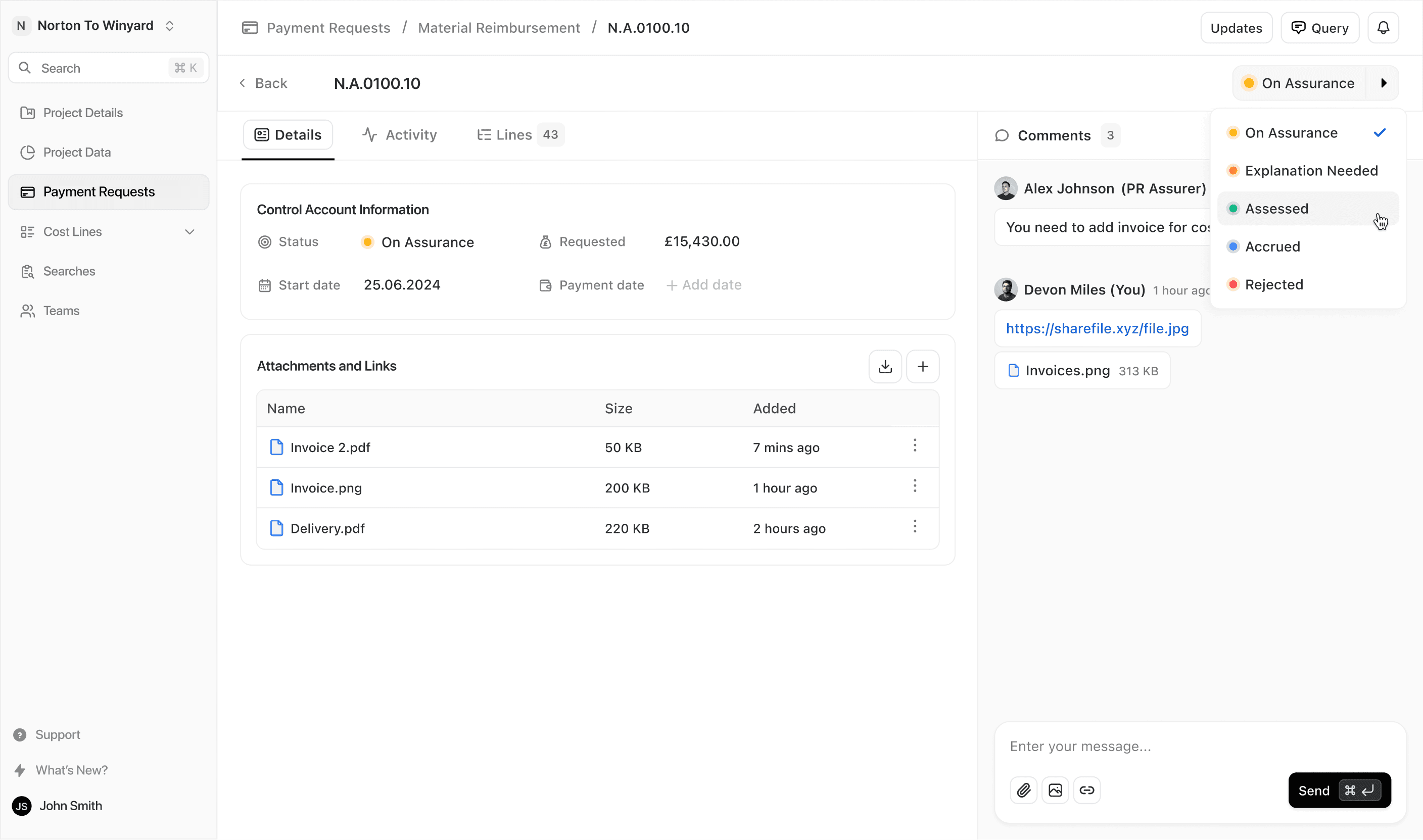
Challenge 3 / Keep every decision in context
How might we keep communication, evidence, statuses, and ownership inside each submission instead of spreading them across external tools?
Solution:
We kept statuses, comments, attachments, and activity history directly within each submission and cost line, so users could investigate issues without leaving the workflow.
Outcome:
Less context switching, faster review, and a clear audit trail of every decision.
Payment requests list

Payment request page/ Control Accounts list

Cost line page
How might we standardize project data before contractor costs enter the assurance process?
Solution:
We designed a human-in-the-loop workflow that automated repeatable matching while keeping users in control of exceptions. Users could create rules, test them, preview matches, and correct exceptions before applying changes.
Outcome:
Less repetitive manual work, with automated decisions remaining transparent and reversible.
Step 1 / Review unaligned costs
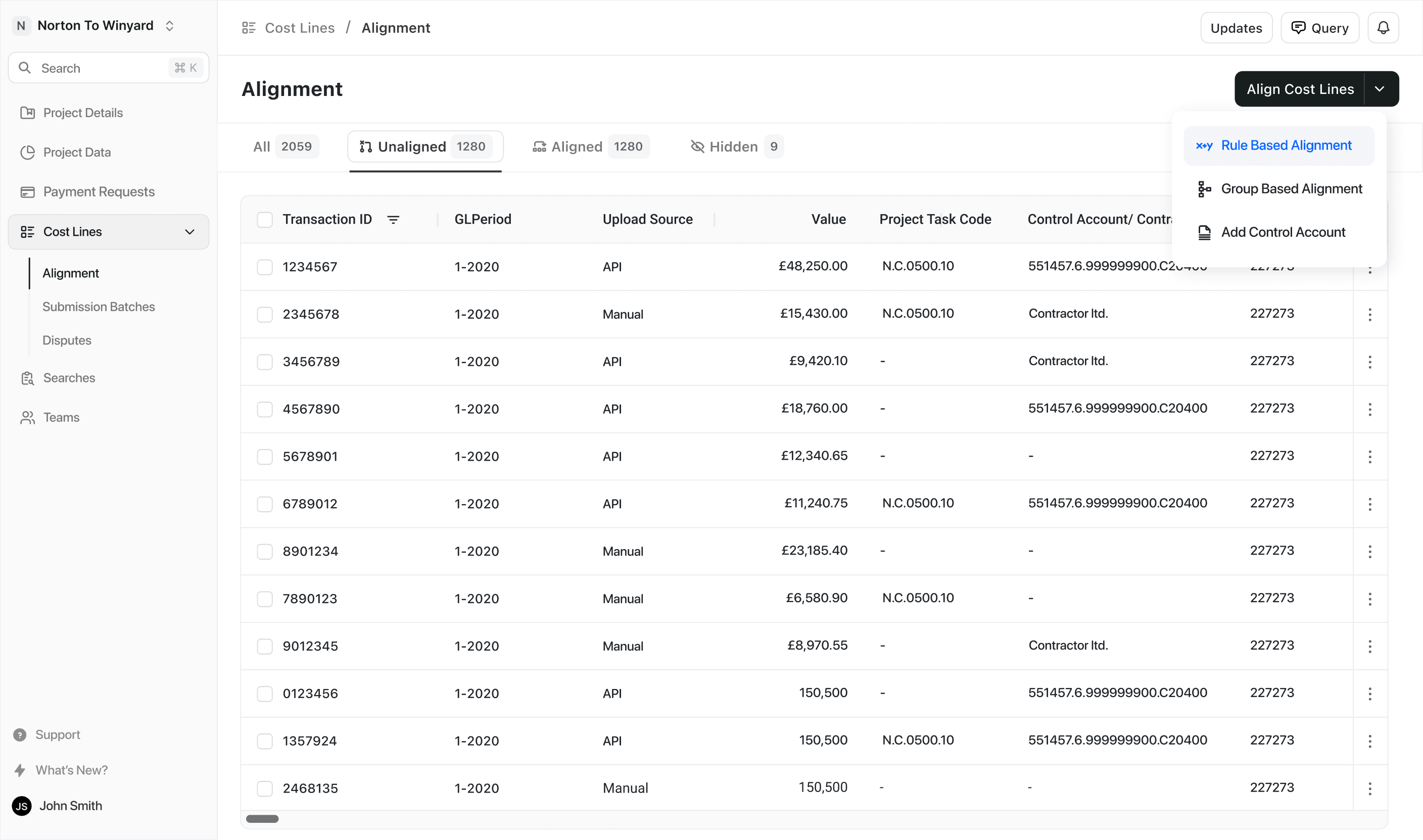
Step 2 / Test alignment rules
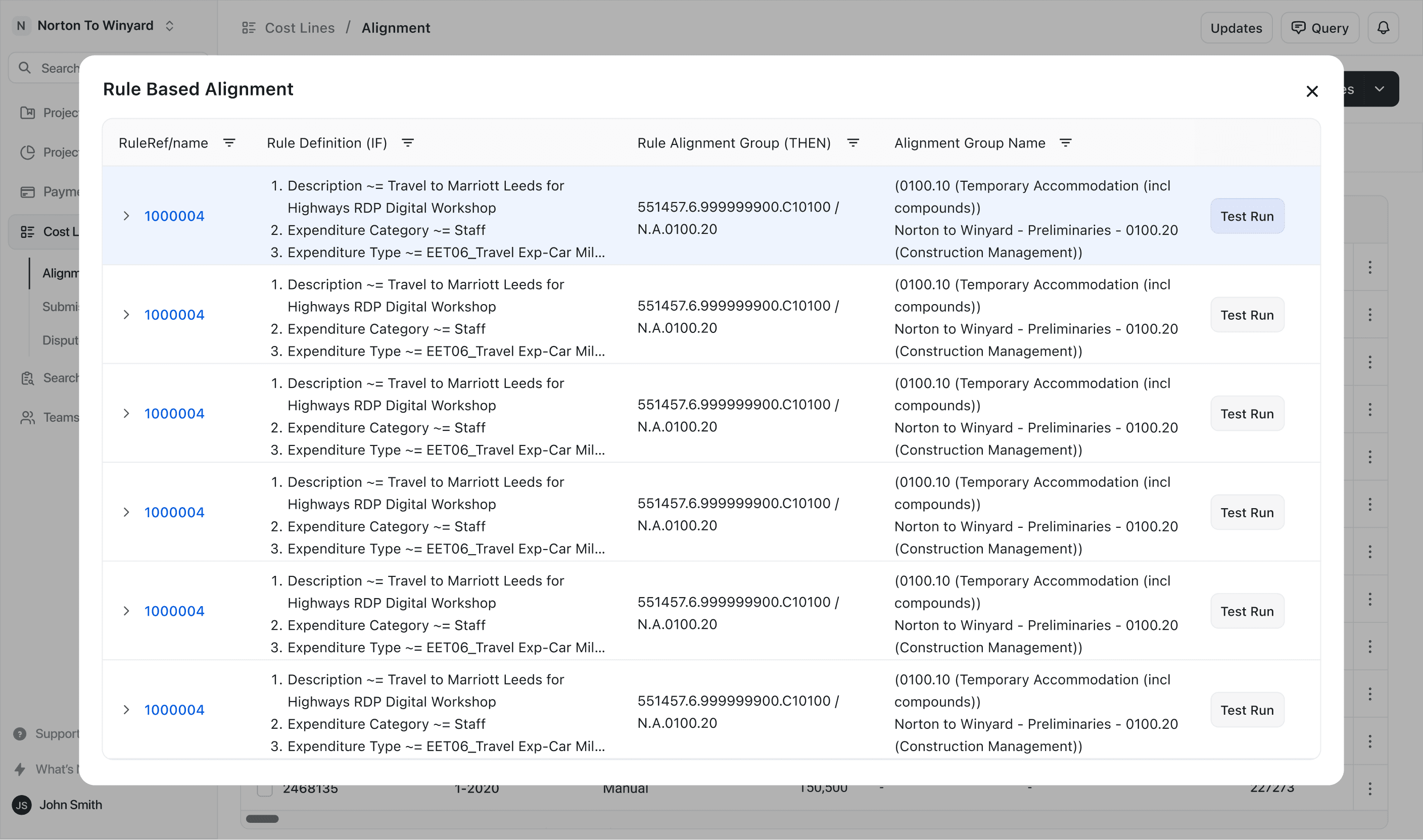
Step 3 / Validate and apply

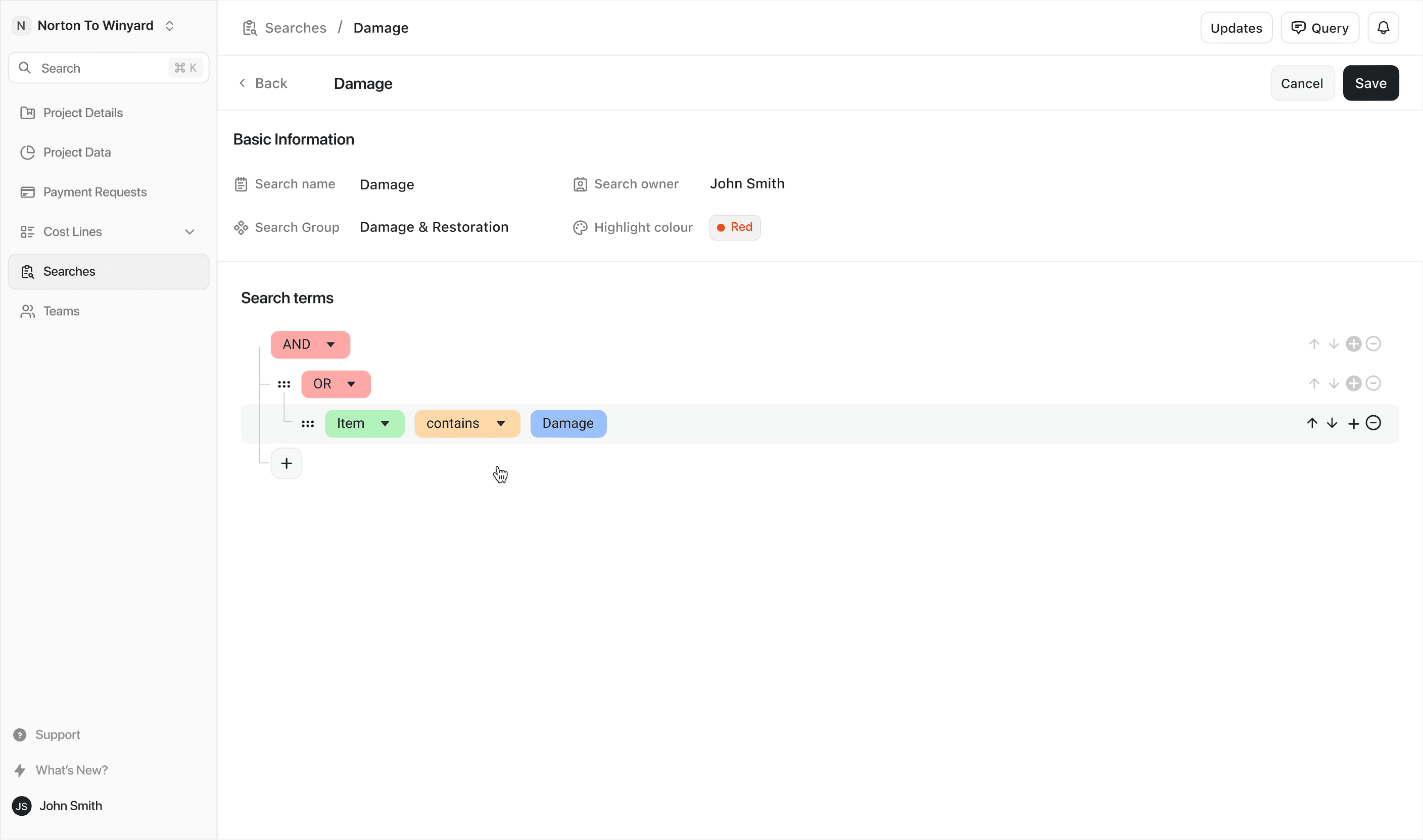
Challenge 5 / Focus assurance on risk
How might we help assurers identify questionable costs without manually scanning the full dataset?
Solution:
We identified recurring risk patterns with stakeholders and grouped them into reusable assurance categories.
Outcome:
Assurers can focus on exceptions faster instead of manually scanning the full dataset.
Searches that assurers run through all cost lines

The solution increased assurance coverage from ~20% to 100% and reduced checks from days to minutes without increasing resources.
Greater visibility and traceability also made inflated or unsupported contractor claims harder to pass unnoticed, reducing financial and compliance risk.